Bamyan also spelled Bamiyan or Bamian is the capital of Bamyan Province in central Afghanistan.
Bamyan
Bamyan also spelled Bamiyan or Bamian is the capital of Bamyan Province in central Afghanistan. Its population of approximately 70,000 people makes it the largest city in Hazarajat. Bamyan is at an altitude of about above sea level. The Bamyan Airport is located in the middle of the city. The driving distance between Bamyan and Kabul in the southeast is approximately . The Band-e-Amir National Park is to the west, about a half-hour drive from the city of Bamyan.
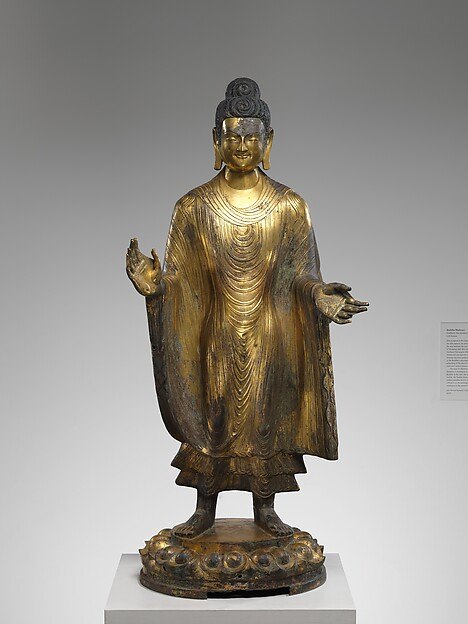
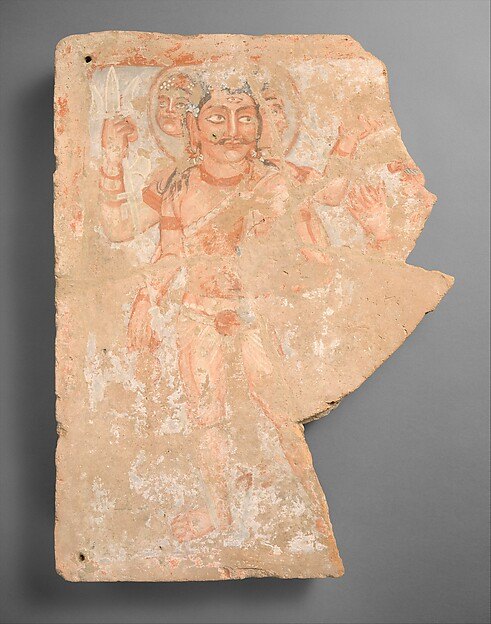
Bamyan is referred to by some as the "Shining Light" and "Valley of Gods". There are several tourist attractions near the city, including the Buddhas of Bamyan, which were carved into cliffs on the north side of Bamyan city in the 6th and 7th century CE, dating them to the Hephthalite rule. Other attractions close to the city include Shahr-e Gholghola and Zuhak. In 2008, Bamyan was found to be the home of the world's oldest oil paintings. At the end of the 10th century, there was a Buddhist culture in which several thousand Buddhist monks lived in caves carved into the mountain. The 53 meters known as the Salsal and 35 meters known as Shahmama are the high-standing Buddha statues and best-known monuments left by the Buddhists, which were destroyed by the Taliban in 2001. Furthermore, there are several cultural sites left from both the Buddhist and the later Islamic era of the valley. After the overthrown of the Taliban from power in 2002, considerable efforts had been made to preserve the cultural monuments in the valley. The city of Bamyan has four districts and a total land area of 3,539 hectares. The total number of dwellings in this city is 4,435.
The Bamyan valley marked the most westerly point of Buddhist expansion and was a crucial hub of trade for much of the second millennium CE. It was a place where East met West and its archaeology reveals a blend of Greek, Turkic, Persian, Chinese, and Indian influences. The valley is one of Afghanistan's most touristic places.
The city of Bamyan joined the UNESCO Creative Cities Network as a Crafts and Folk Art city in 2017. "UNESCO noted the Bamiyan Valley is the most monumental expression of western Buddhism". Bamiyan is now listed by UNESCO as a World Heritage Site in Danger.
On 15 August 2021, Bamyan was seized again by Taliban fighters, becoming the twenty-ninth provincial capital to be captured by the Taliban as part of the wider 2021 Taliban offensive.
Geography
The 2,500 m high valley is about 230 km northwest of Kabul and separates the Hindu Kush mountain range from the Koh-e Baba mountains. On the north side, there is an approximately 1.5 kilometers long, high, almost vertical sandstone cliff that was formed by a glacier. The Buddha statues and most of the caves in the valley were carved into this rock face. In the valley itself and on the slopes, there are numerous ruins from earlier times.
"Bamiyan is located between the Indian subcontinent (to the southeast) and Central Asia (to the north), which made it an important location close to one of the most important branches of the Silk Route". Situated on the ancient Silk Route, the town was at the crossroads between the East and West when all trade between China and the Middle East passed through it. The Hunas made it their capital in the 5th century. Because of the cliff of the Buddhas, the ruins of the Monk's caves, Shahr-e Gholghola ('City of Sighs', the ruins of an ancient city destroyed by Genghis Khan during the 1221 siege of Bamiyan), and its local scenery, it is one of the most visited places in Afghanistan. The Shahr-e Zuhak mound ten miles south of the valley is the site of a citadel that guarded the city, and the ruins of an acropolis could be found there as recently as the 1990s.
The town is the cultural center of the Hazara ethnic group of Afghanistan. Most of the population lives in downtown Bamyan. The valley is cradled between the parallel mountain ranges of the Hindu Kush and the Koh-i-Baba.
Mountains cover ninety percent of the province, and the cold, long winter, lasting for six months, brings temperatures of three to twenty degrees Celsius below zero. Mainly Daizangi Hazara people live in the area. Transportation facilities are increasing, but sparse. Notably, Bamyan is now connected by road to Kabul through Parwan province and Maidan Wardak. The connection between Maidan Shar and Bamyan – 136 km long – makes it possible to reach Kabul in a 2-hour drive. The connection is almost completed missing just 15 km of paving.
The main crops are wheat, barley, mushung, and baquli, grown in spring. When crops are damaged by unusually harsh weather, residents herd their livestock down to Ghazni and Maidan provinces to exchange for food.
History
The city of Bamyan was part of the Kushan Empire in the early centuries of the Christian era. After the Kushan Empire fell to the Sassanids, Bamyan became part of the Kushansha, vassals to the Sassanids. The Buddhist pilgrim Fa Xian visited Bamyan in the fifth century and recorded that the king summoned the monks of the region for vows and prayers. Fa Xian also records landslides and avalanches in the mountains and the presence of snow during winter and summer. This latter statement suggests climatic change which could have contributed to the historical and economic importance of the area for the years to come. Another Buddhist traveller, Xuanzang, passed through Bamyan in the seventh century. His record shows that the Bamiyan Buddhas and cave monastery near it were already built. He also records that Buddhism in the region was in decay with the people being "hard and uncultivated".
Background reading selected and abridged from Bamyan by Wikipedia contributors (November 2023 edition), under CC BY-SA 4.0. The linked histories identify contributing authors.