Paryushana (Pajjusana) is the most important annual holy event for Jains and is usually celebrated in August or September in Lunisolar Hindu calendar.
Paryushana
Paryushana (Pajjusana) is the most important annual holy event for Jains and is usually celebrated in August or September in Lunisolar Hindu calendar. The festival commences on different days and differs in duration for the Digambara and the Shwetambara sects, and culminates in the forgiveness day; Kshamavani and Samvatsari respectively.
Jains increase their level of spiritual intensity using fasting and prayer/meditation. The five main vows of Jainism are emphasized during this time. Followers are encouraged to practice according to their ability and desires.
The duration of Paryushana is 8 days for Śvētāmbara Jains and 10 days for Jains belonging to the Digambara sect. It is called as Das Lakshana by Digambara Jains, a 10-day spiritual festival that starts when Paryushan of Śvētāmbara ends, on the Samvatsari. The celebration of Samvatsari or Kshamavani (forgiveness) is the same for both the sects.
This festival is important for Jains since it only comes once in a year. Jain festivals are characterized by renunciation, austerities, study of the scriptures, repetition of holy hymns, meditation & expressing devotion for the Paramatma. Everyday some or the other Tap is followed. In any tap, chauvihar is a must ie, No food or water after sunset until Navkarsi (48 minutes after sunrise) next day. Not only underground vegetables but consuming of fresh vegetables & fruits is also prohibited during Paryushan.
History of Pajjusana & Kalpasutra
The original word for Paryushan is 'Pajjusan'. References are found in the Jain scriptures-Kalpa Sutra, Samvaayang Sutra, Nishith Sutra & Nishith Bhashya Churni. Preachings of Lord Mahavir were orally compiled into Agams by his disciples. Agams are divided into 12 & are called the Anga Agam - 11 Angas & 14 Pūrvas (12th Anga Drstivada is lost). However a detailed table of contents of Drstivada has survived in the 4th Anga Samavāyānga & Nandīsūtra. Some portions hv survived in Satkhandāgama & Kasāyaprabhrta as well.
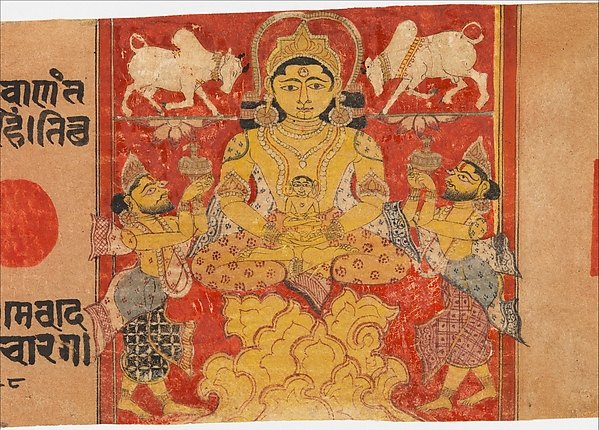
Learning of the sacred Agams was carried out only amongst the Sadhus initially. Then, in Vikram Samvat 523, King Dhruvsen of Anandpur, a capital of Gujarat lost his son & went into grief. He requested Acharya Kalaksuri to relieve him from grief. The days of Paryushana were close. For the 1st time in public & chaturvidhi sangh, there was an oration about the importance & power of Pajjusana & the Shravan Paathan of Kalpasutra. His grief vanished after listening. Next year, he requested again for the discourse & since then this parampara has continued. Kalpasutra is recited during Pajjusan touching every aspect of the life of Chaturvidhi Sangh (Shraman, Shramani, Shravak, Shravika).
Pajjusana comes in the 3rd section of the Kalpasūtra called 'Sāmācārī' (saamaachari/Right Monastic Conduct) expressed as "vāsā-vāsaṃ pajjosavei" ie, to perform the Pajjusana rites during the peak of Chaturmas, which in those days was considered to be a month+20 days. Farmers etc would often be compelled to refrain from their agricultural work during Rainy season. It was challenging to travel on roads, the added moisture caused an increase in the no. of insects & bugs in the environment, making it extremely difficult to travel w/o harming them. Monks should find a suitable place to stay before Chaturmas starts & stop Vihar. In case they donot find, a grace period of 50 days was given to keep looking for it. However if they don't find, on the 50th day they must do Pratikraman under a tree. This day was named as SAMVATSARI. Acharyas added days prior or post to this day & it became a festival. After performing Pratikraman, Jains seek forgiveness from all the creatures of the world whom they may have harmed knowingly or unknowingly by uttering the phrase - 'Micchami Dukkadam' or 'Khammat Khamana'.
Observances
During the eight-day festival, the Śvētāmbara Murtipujakas recite the Kalpa Sūtra, which includes a recitation of the section on the birth of Mahavira on the fifth day. Some Śvētāmbara Sthānakavāsīs recite the Antagada Sutra, which details the life of 90 great men and women who attained moksha during the eras of the 22nd Tirthankar Neminatha and 24th Tirthankar Mahavira.
The Digambara Jains recite the ten chapters of the sacred Jain text, Tattvartha Sutra on ten days of fasting. The sixth day of the festival is celebrated as Sugandh Dashami by the Digambara Community. Digambaras celebrate Ananta Chaturdashi on which a special worship is done. Many towns have a procession leading to the main Jain temple. Ananta Chaturdashi marks the day when Lord Vasupujya, the 12th Jain Tirthankar, attained Moksha (nirvana).
At the conclusion of the festival, followers request forgiveness from others for any offenses committed during the last year. Forgiveness is asked by saying Micchami Dukkadam or Uttam Kshama to others, which means, "If I have offended you in any way, knowingly or unknowingly, in thought, word or action, then I seek your forgiveness."
Fasting
During Paryushana, Jains observe a fast. The span of the fast can last from a day to 30 days or even more. In Shvetambara śrāvakas (laypersons) fast by having only boiled water which can be consumed between sunrise and sunset.
There are many different kinds of fasts apart from Upavaas that can be kept, from a one meal (ekasana), 2 meal, (byasana), 3-days fast etc that can be taken up. Food has to be consumed in one place. Before sunset, all intake of food or water should be taken, it is prohibited after sunset until sunrise next day.
Background reading selected and abridged from Paryushana by Wikipedia contributors (November 2023 edition), under CC BY-SA 4.0. The linked histories identify contributing authors.