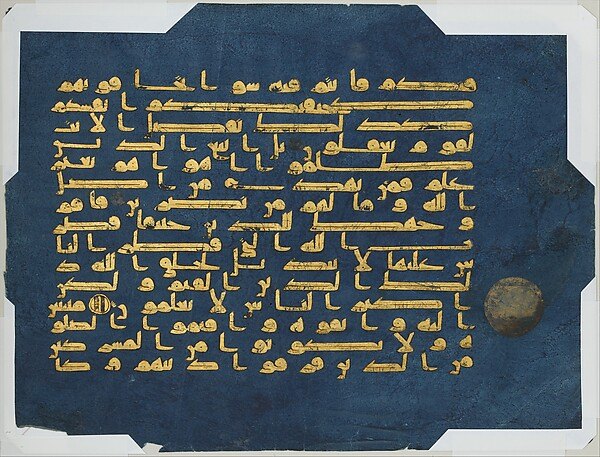
Intangible cultural heritage is passed orally within a community, and while there may be individuals who are known tradition bearers, ICH is often broader than one individual's own skills or knowledge.
Intangible cultural heritage
Oral continuity
Intangible cultural heritage is passed orally within a community, and while there may be individuals who are known tradition bearers, ICH is often broader than one individual's own skills or knowledge. A 2006 report by the government of Newfoundland and Labrador said, regarding oral culture in their area, "The processes involved in the continuation of this traditional knowledge constitute one of the most interesting aspects of our living heritage. Each member of the community possesses a piece of the shared knowledge. Crucial knowledge is passed on during community activities, frequently without any conscious attention to the process."
Preservation
Prior to the UNESCO Convention, efforts had already been made by a number of states to safeguard their intangible heritage. Japan, with its 1950 Law for the Protection of Cultural Properties, was the first to introduce legislation to preserve and promote intangible as well as tangible culture: Important Intangible Cultural Properties are designated and "holders" recognized of these craft and performance traditions, known informally as Living National Treasures. Other countries, including South Korea (Important Intangible Cultural Properties of Korea), the Philippines, Ukraine, the United States, Thailand, France, Romania, the Czech Republic, and Poland, have since created similar programs.
In 2003 UNESCO adopted the Convention for the Safeguarding of the Intangible Cultural Heritage. This went into effect on 20 April 2006. The Convention recommends that countries and scholars develop inventories of ICH in their territory, as well as work with the groups who maintain these ICH to ensure their continued existences; it also provides for funds to be voluntarily collected among UNESCO members and then disbursed to support the maintenance of recognized ICH. UNESCO has also created other intangible culture programs, such as a list called Proclamation of Masterpieces of the Oral and Intangible Heritage of Humanity. This list began in 2001 with 19 items and a further 28 were listed in 2003 and another 43 in 2005. In part, the original list was seen as a way to correct the imbalance in the World Heritage List, since it excluded many Southern Hemisphere cultures which did not produce monuments or other physical cultural manifestations. It was superseded in 2008 by the UNESCO Intangible Cultural Heritage Lists.
Recently there has been much debate over protecting intangible cultural heritage through intellectual property rights, as well as the desirability to do so through this legal framework and the risks of commodification derived from this possibility. The issue still remains open in legal scholarship.
Cultural heritage
The ethics and rationale of cultural preservation
Objects are a part of the study of human history because they provide a concrete basis for ideas, and can validate them. Their preservation demonstrates a recognition of the necessity of the past and of the things that tell its story. In The Past is a Foreign Country, David Lowenthal observes that preserved objects also validate memories. While digital acquisition techniques can provide a technological solution that is able to acquire the shape and the appearance of artifacts with an unprecedented precision in human history, the actuality of the object, as opposed to a reproduction, draws people in and gives them a literal way of touching the past. This, unfortunately, poses a danger as places and things are damaged by the hands of tourists, the light required to display them, and other risks of making an object known and available. The reality of this risk reinforces the fact that all artifacts are in a constant state of chemical transformation, so that what is considered to be preserved is actually changing – it is never as it once was. Similarly changing is the value each generation may place on the past and on the artifacts that link it to the past.
Classical civilizations, especially Indian, have attributed supreme importance to the preservation of tradition. Its central idea was that social institutions, scientific knowledge and technological applications need to use a "heritage" as a "resource". Using contemporary language, we could say that ancient Indians considered, as social resources, both economic assets (like natural resources and their exploitation structure) and factors promoting social integration (like institutions for the preservation of knowledge and for the maintenance of civil order). Ethics considered that what had been inherited should not be consumed, but should be handed over, possibly enriched, to successive generations. This was a moral imperative for all, except in the final life stage of sannyasa.
World heritage movement
Significant was the Convention Concerning the Protection of World Cultural and Natural Heritage that was adopted by the General Conference of UNESCO in 1972. As of 2011, there are 936 World Heritage Sites: 725 cultural, 183 natural, and 28 mixed properties, in 153 countries. Each of these sites is considered important to the international community.
The underwater cultural heritage is protected by the UNESCO Convention on the Protection of the Underwater Cultural Heritage. This convention is a legal instrument helping states parties to improve the protection of their underwater cultural heritage.
In addition, UNESCO has begun designating masterpieces of the Oral and Intangible Heritage of Humanity. The Committee on Economic, Social and Cultural Rights sitting as part of the United Nations Economic and Social Council with article 15 of its Covenant had sought to instill the principles under which cultural heritage is protected as part of a basic human right.
Background reading selected and abridged from Intangible cultural heritage, Cultural heritage by Wikipedia contributors (November 2023 edition), under CC BY-SA 4.0. The linked histories identify contributing authors.