The history of printing starts as early as 3000 BCE, when the proto-Elamite and Sumerian civilizations used cylinder seals to certify documents written in clay tablets.
History of printing
The history of printing starts as early as 3000 BCE, when the proto-Elamite and Sumerian civilizations used cylinder seals to certify documents written in clay tablets. Other early forms include block seals, hammered coinage, pottery imprints, and cloth printing. Initially a method of printing patterns on cloth such as silk, woodblock printing for texts on paper originated in China by the 7th century during the Tang dynasty, leading to the spread of book production and woodblock printing in other parts of Asia such as Korea and Japan. The Chinese Buddhist Diamond Sutra, printed by woodblock on 11 May 868, is the earliest known printed book with a precise publishing date. Movable type was invented by Chinese artisan Bi Sheng in the 11th century during the Song dynasty, but it received limited use compared to woodblock printing. Nevertheless, the technology spread outside China, as the oldest printed book using metal movable type was the Jikji, printed in Korea in 1377 during the Goryeo era.
Woodblock printing was also used in Europe until the mid-15th century. Late medieval German inventor Johannes Gutenberg created the first printing press based on previously known mechanical presses and a process for mass-producing metal type. By the end of the 15th century, his invention and widescale circulation of the Gutenberg Bible became responsible for a burgeoning economical book publishing industry across Renaissance Europe and eventually among the colonial publishers and printers that emerged in the British-American colonies. This industry enabled the communication of ideas and the sharing of knowledge on an unprecedented scale, leading to the global spread of the printing press during the early modern period. Alongside the development of text printing, new and lower-cost methods of image reproduction were developed, including lithography, screen printing and photocopying.
Stencil
Hand stencils, made by blowing pigment over a hand held against a wall, have been found in Asia and Europe dating from over 35,000 years ago, and later prehistoric dates in other continents. More recently, stencilling has historically been used as a painting technique on all kinds of materials.
Stencils may have been used to colour cloth for a very long time; the technique probably reached its peak of sophistication in katazome and other techniques used on silks for clothes during the Edo period in Japan. In Europe, from about 1450 AD they were commonly used to colour old master prints printed in black and white, usually woodcuts. This was especially the case with playing-cards, which continued to be coloured by stencil long after most other subjects for prints were left in black and white. Stencils were used for mass publications, as the type did not have to be hand-written.
Seals
In China, seals have been used since at least the Shang dynasty (2nd millennium BCE). In the Western Zhou, sets of seal stamps were encased in blocks of type and used on clay moulds for casting bronzes. By the end of the 3rd century BCE, seals were also used for printing on pottery. In the Northern dynasties textual sources contain references to wooden seals with up to 120 characters.
The seals had a religious element to them. Daoists used seals as healing devices by impressing therapeutic characters onto the flesh of sick people. They were also used to stamp food, creating a talismanic character to ward off disease. The first evidence of these practices appeared under a Buddhist context in the mid 5th century CE. Centuries later, seals were used to create hundreds of Buddha images.
In the West the practice of sealing documents with an impressed personal or official insignia, typically from a worn signet ring, became established under the Roman Empire, and continued through the Byzantine and Holy Roman empires, into the 19th century, when a wet signature became customary.
Stone, clay and bronze blocks
Stone and bronze blocks have been used to print fabric. Archaeological evidence of them has been unearthed at Mawangdui and in the tomb of the King of Nanyue, while block printed fabrics have been discovered at Mashan Zhuanchang in Jiangling, Hubei.
Pliny the Elder described clay block printing of textiles in 1st century CE Egypt, with extant Egyptian, Roman, Byzantine, Ukrainian, and Russian examples known, dating from the 4th century CE.
In the 4th century the practice of creating paper rubbings of stone carvings such as calligraphic models and texts took hold in East Asia. Among the earliest evidence of this is a stone inscription cut in mirror image from the early 6th century.
Woodblock printing
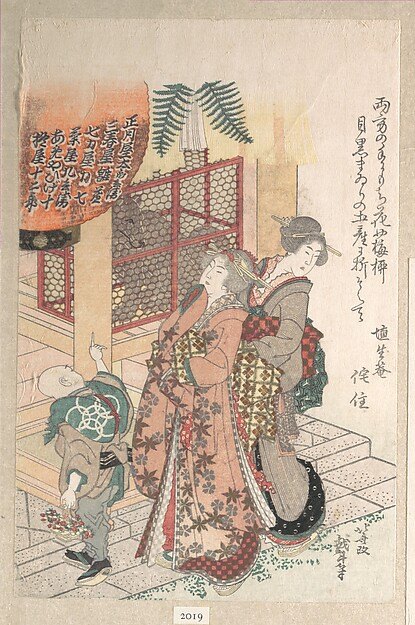
Woodblock printing (diaoban yinshua 雕版印刷), known as xylography today, was the first method of printing applied to a paper medium. It became widely used throughout East Asia both as a method for printing on textiles and later, under the influence of Buddhism, on paper. As a method of printing on cloth, the earliest surviving examples from China date to about 220 CE. Ukiyo-e is the best known type of Japanese woodblock art print. Most European uses of the technique on paper are covered by the term woodcut (see below), except for the block books produced mainly in the 15th century.
Background reading selected and abridged from History of printing by Wikipedia contributors (November 2023 edition), under CC BY-SA 4.0. The linked histories identify contributing authors.