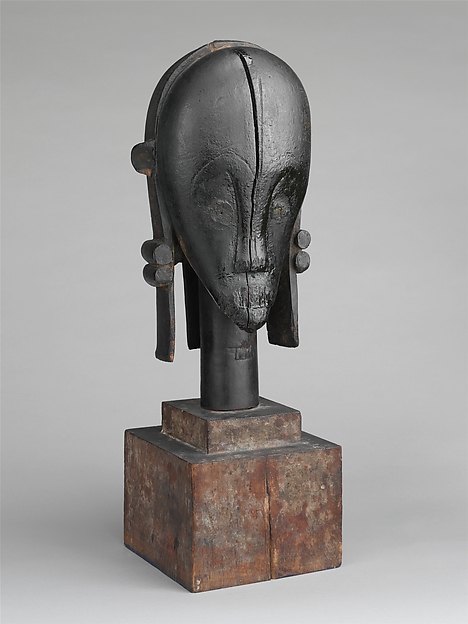
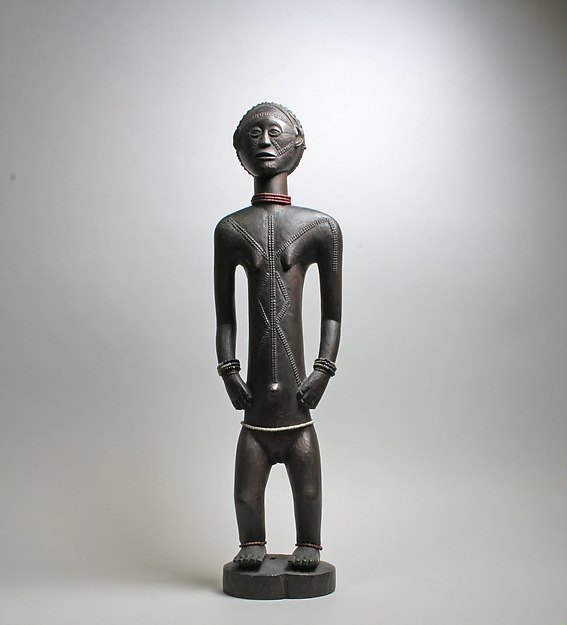
Animism (from Latin: meaning 'breath, spirit, life') is the belief that objects, places, and creatures all possess a distinct spiritual essence.
Animism
Animism (from Latin: meaning 'breath, spirit, life') is the belief that objects, places, and creatures all possess a distinct spiritual essence. Animism perceives all things—animals, plants, rocks, rivers, weather systems, human handiwork, and in some cases words—as animated and alive. Animism is used in anthropology of religion as a term for the belief system of many Indigenous peoples in contrast to the relatively more recent development of organized religions. Animism focuses on the metaphysical universe; specifically, on the concept of the immaterial soul.
Although each culture has its own mythologies and rituals, animism is said to describe the most common, foundational thread of indigenous peoples' "spiritual" or "supernatural" perspectives. The animistic perspective is so widely held and inherent to most indigenous peoples that they often do not even have a word in their languages that corresponds to "animism" (or even "religion"). The term "animism" is an anthropological construct.
Largely due to such ethnolinguistic and cultural discrepancies, opinions differ on whether animism refers to an ancestral mode of experience common to indigenous peoples around the world or to a full-fledged religion in its own right. The currently accepted definition of animism was only developed in the late 19th century (1871) by Edward Tylor. It is "one of anthropology's earliest concepts, if not the first."
Animism encompasses beliefs that all material phenomena have agency, that there exists no categorical distinction between the spiritual and physical world, and that soul, spirit, or sentience exists not only in humans but also in other animals, plants, rocks, geographic features (such as mountains and rivers), and other entities of the natural environment. Examples include water sprites, vegetation deities, and tree spirits, among others. Animism may further attribute a life force to abstract concepts such as words, true names, or metaphors in mythology. Some members of the non-tribal world also consider themselves animists, such as author Daniel Quinn, sculptor Lawson Oyekan, and many contemporary Pagans.
Etymology
English anthropologist Sir Edward Tylor initially wanted to describe the phenomenon as spiritualism, but he realized that it would cause confusion with the modern religion of spiritualism, which was then prevalent across Western nations. He adopted the term animism from the writings of German scientist Georg Ernst Stahl, who had developed the term in 1708 as a biological theory that souls formed the vital principle, and that the normal phenomena of life and the abnormal phenomena of disease could be traced to spiritual causes.
"Old animism" definitions
Earlier anthropological perspectives, which have since been termed the old animism, were concerned with knowledge on what is alive and what factors make something alive. The old animism assumed that animists were individuals who were unable to understand the difference between persons and things. Critics of the old animism have accused it of preserving "colonialist and dualistic worldviews and rhetoric."
Edward Tylor's definition
The idea of animism was developed by anthropologist Sir Edward Tylor through his 1871 book Primitive Culture, in which he defined it as "the general doctrine of souls and other spiritual beings in general." According to Tylor, animism often includes "an idea of pervading life and will in nature;" a belief that natural objects other than humans have souls. This formulation was little different from that proposed by Auguste Comte as "fetishism", but the terms now have distinct meanings.
For Tylor, animism represented the earliest form of religion, being situated within an evolutionary framework of religion that has developed in stages and which will ultimately lead to humanity rejecting religion altogether in favor of scientific rationality. Thus, for Tylor, animism was fundamentally seen as a mistake, a basic error from which all religions grew. He did not believe that animism was inherently illogical, but he suggested that it arose from early humans' dreams and visions and thus was a rational system. However, it was based on erroneous, unscientific observations about the nature of reality. Stringer notes that his reading of Primitive Culture led him to believe that Tylor was far more sympathetic in regard to "primitive" populations than many of his contemporaries and that Tylor expressed no belief that there was any difference between the intellectual capabilities of "savage" people and Westerners.
The idea that there had once been "one universal form of primitive religion" (whether labelled animism, totemism, or shamanism) has been dismissed as "unsophisticated" and "erroneous" by archaeologist Timothy Insoll, who stated that "it removes complexity, a precondition of religion now, in all its variants."
Social evolutionist conceptions
Tylor's definition of animism was part of a growing international debate on the nature of "primitive society" by lawyers, theologians, and philologists. The debate defined the field of research of a new science: anthropology. By the end of the 19th century, an orthodoxy on "primitive society" had emerged, but few anthropologists still would accept that definition. The "19th-century armchair anthropologists" argued that "primitive society" (an evolutionary category) was ordered by kinship and divided into exogamous descent groups related by a series of marriage exchanges. Their religion was animism, the belief that natural species and objects had souls.
Background reading selected and abridged from Animism by Wikipedia contributors (November 2023 edition), under CC BY-SA 4.0. The linked histories identify contributing authors.